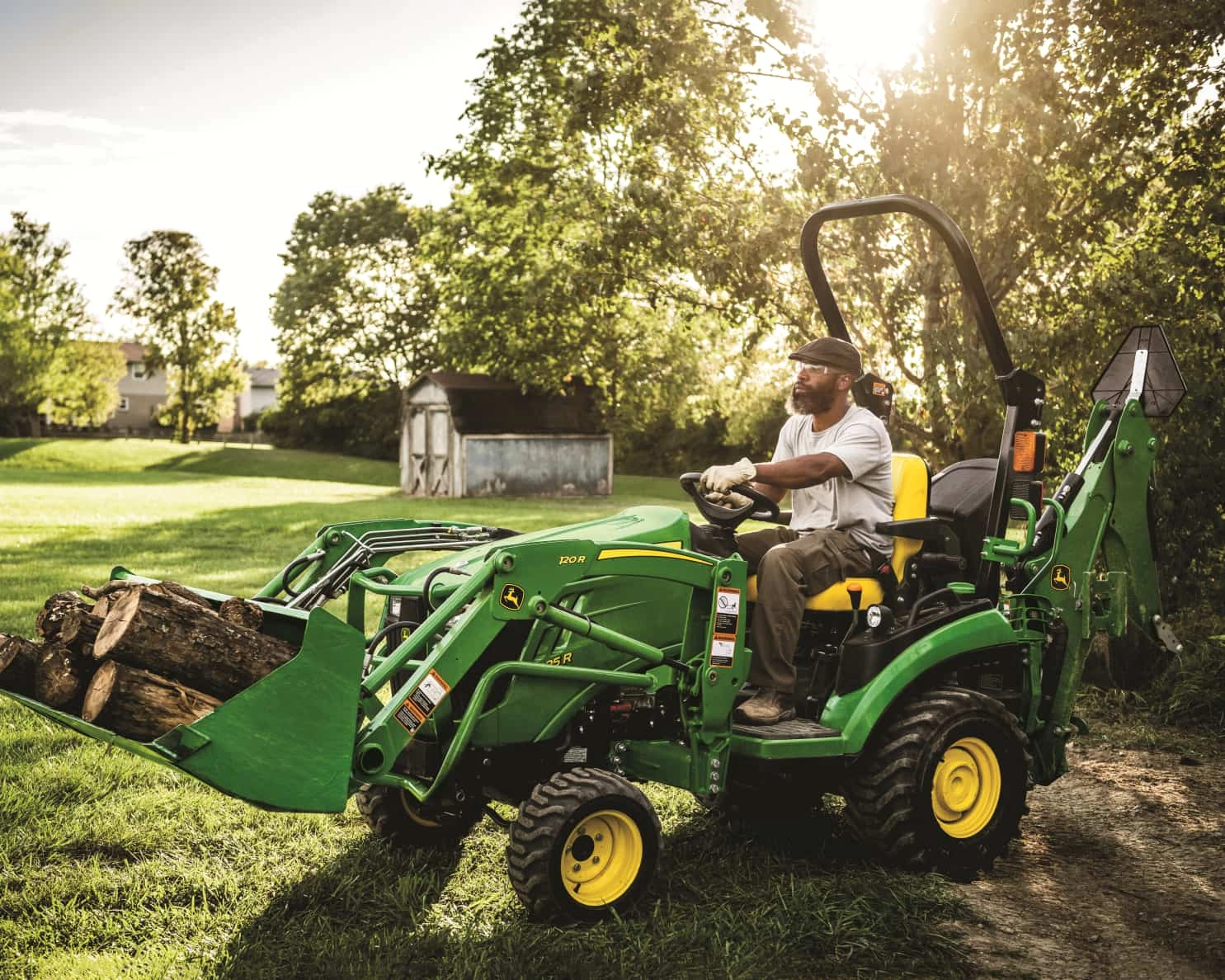
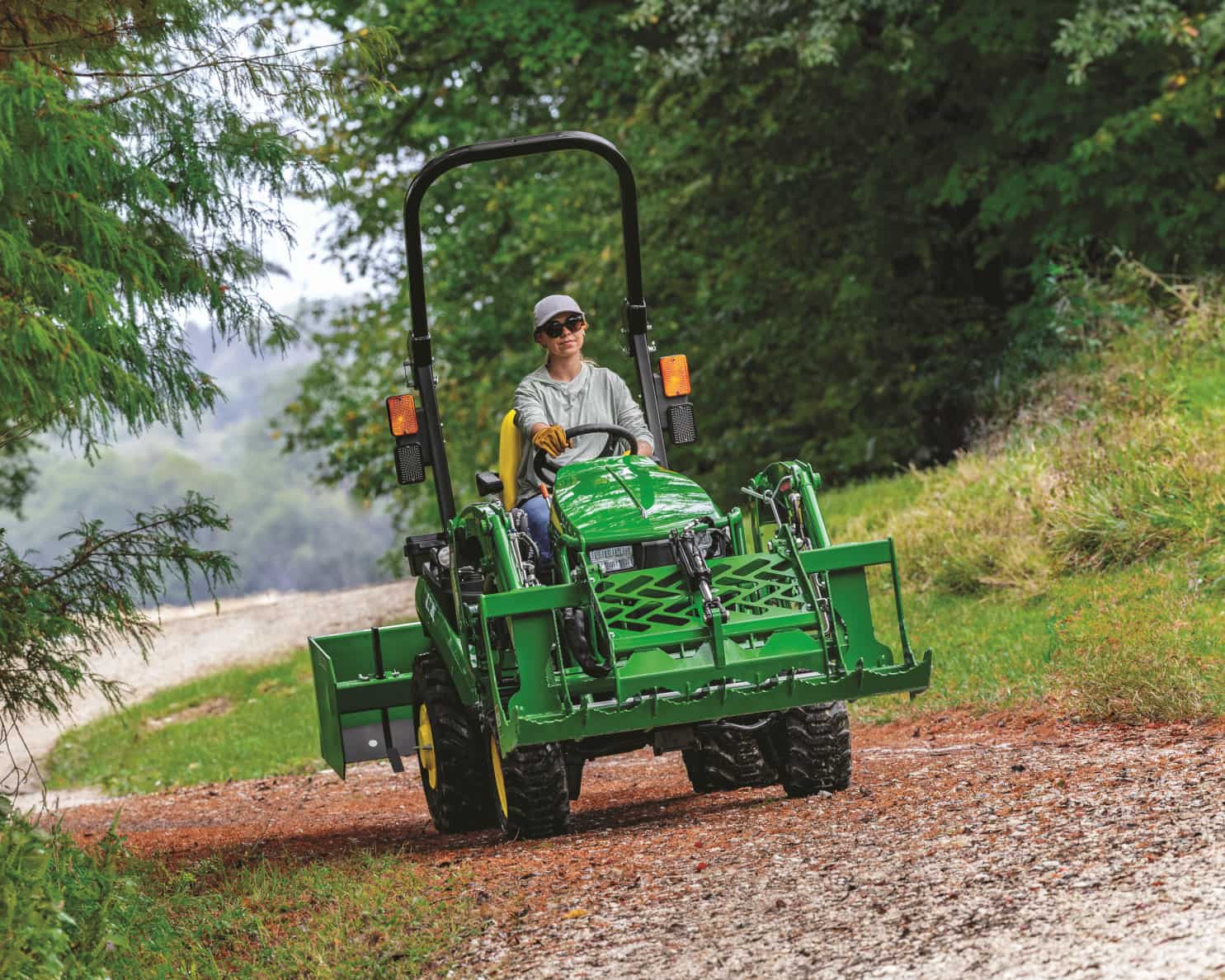
Compact tractors are powerful tools for property maintenance, landscaping, light construction, and much more. But operating a compact tractor on uneven terrain adds risk. Whether you’re working on rolling hills, rough pastures, or rocky lots, we’ve listed common mistakes to avoid in order to make your work more efficient. The bonus? Your tractor will last longer.
Ignoring the Importance of a Ballast
One of the most common errors operators make is forgetting to balance and ballast their tractor. When working on sloped or rough terrain, a proper ballast – whether it’s wheel weights, loaded tires, or implement counterweights – is critical.
Why It Matters: Unbalanced tractors are prone to tipping, especially when traveling under load on slopes. A properly ballasted machine will benefit from better traction and a lower center of gravity.
Operating at High Speeds
On flat ground, compact tractors can move at an impressive speed. On uneven ground, speed can quickly become dangerous.
Why It Matters: Hitting bumps, dips, or ruts at high speeds can make it difficult to steer or stop. It also addsd unnecessary stress to your tires and suspension. Always downshift and approach rough patches of land with caution.
Driving Across Steep Slopes Instead of Up and Down
While it can be tempting to take a shortcut and cross a hillside for convenience, it’s a toppling hazard which can result in injuries and expensive damage.
Why It Matters: Tractors are more stable when traveling straight up or down a slope, rather than across it. Traversing side slopes, especially with a loader or uneven load, massively increases your risk of a rollover.
Lifting Loads Too High on Uneven Ground
Many compact tractors are equipped with a front-end loader, and operators can be tempted to raise the load high to avoid obstacles. On uneven land, this can be a huge risk.
Why It Matters: Raising the center of gravity while on uneven land increases the risk of tipping. Keep the load low when moving – especially on uneven terrain.
Not Using 4WD When Needed
Modern compact utility tractors are often equipped with 4WD and differential wheel lock. Understanding when terrain calls for use of these features is crucial.
Why It Matters: Traction is crucial on uneven slippery terrain. Engaging 4WD and using differential lock helps to maintain traction and reduce the likelihood of wheelspin and getting stuck.
Overloading Implements or Attachments
While compact tractors boast impressive lifting capabilities, they have their limits. Overloading implements like a front bucket or rear blade, especially on uneven ground, is dangerous.
Why It Matters: Exceeding weight limits shifts the balance of the tractor, making braking and steering more difficult. Always consult your operator’s manual for rated capacity guidelines.
Not Wearing a Seatbelt
Finally, and most obviously, a seatbelt is an utmost necessity, especially on rough terrain. Even if your tractor features a rollover protective structure (ROPS), the seatbelt is what will keep you protected.
Why It Matters: In a rollover, being ejected from the seat can result in a fatal accident. Wearing your seatbelt is a simple step in keeping yourself safe in the driver’s seat.
If you’re seeking futher advice on safe practices when it comes to tractor operation, reach out to your local Heritage Tractor to speak with an expert.