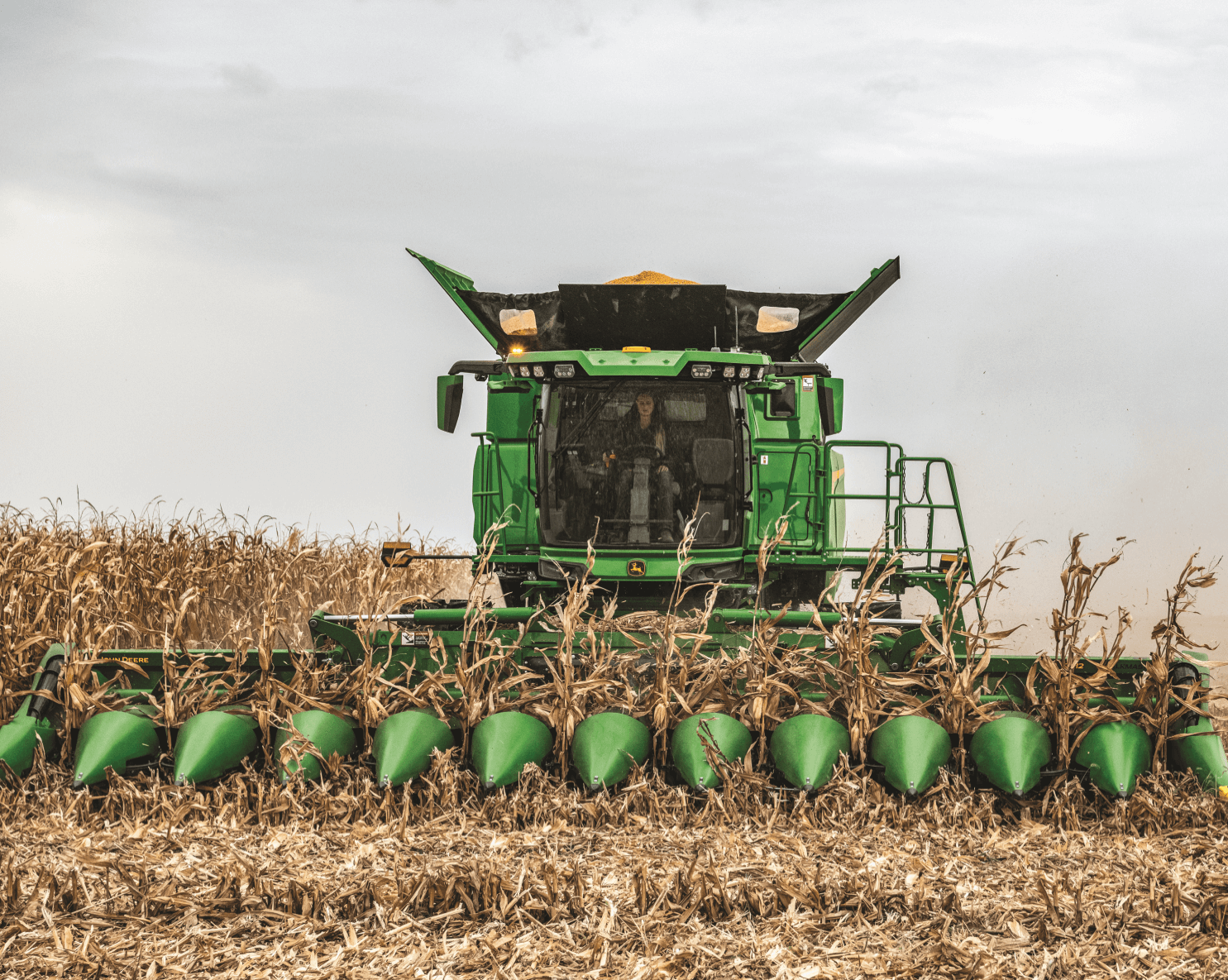
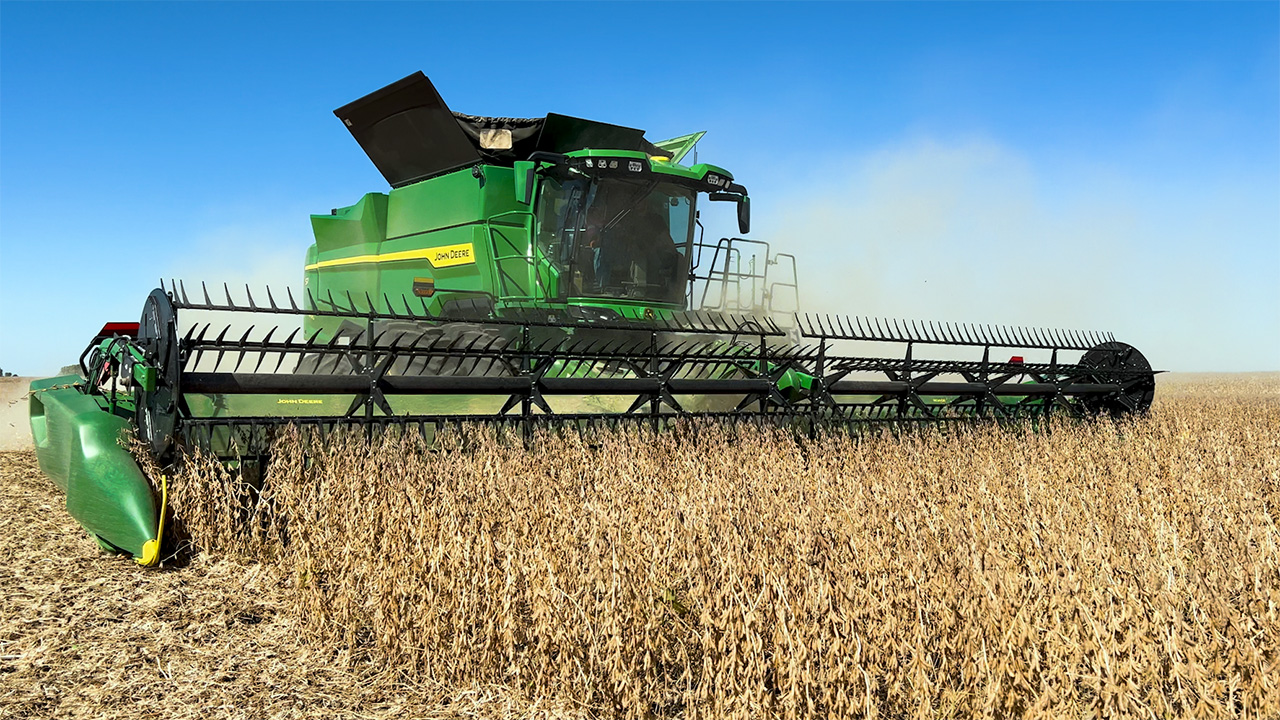
Say hello to the S7. Introduced in 2024, the new John Deere S7 Series combines are designed to maximize efficiency, harvest quality, and operator comfort. These flagship combines are perfect for farmers and custom operators who need to get the most out of their harvest season. Let’s dive into some key changes between the old S700 Series and the new S7 Series.
Here’s what you need to know:
Four new models
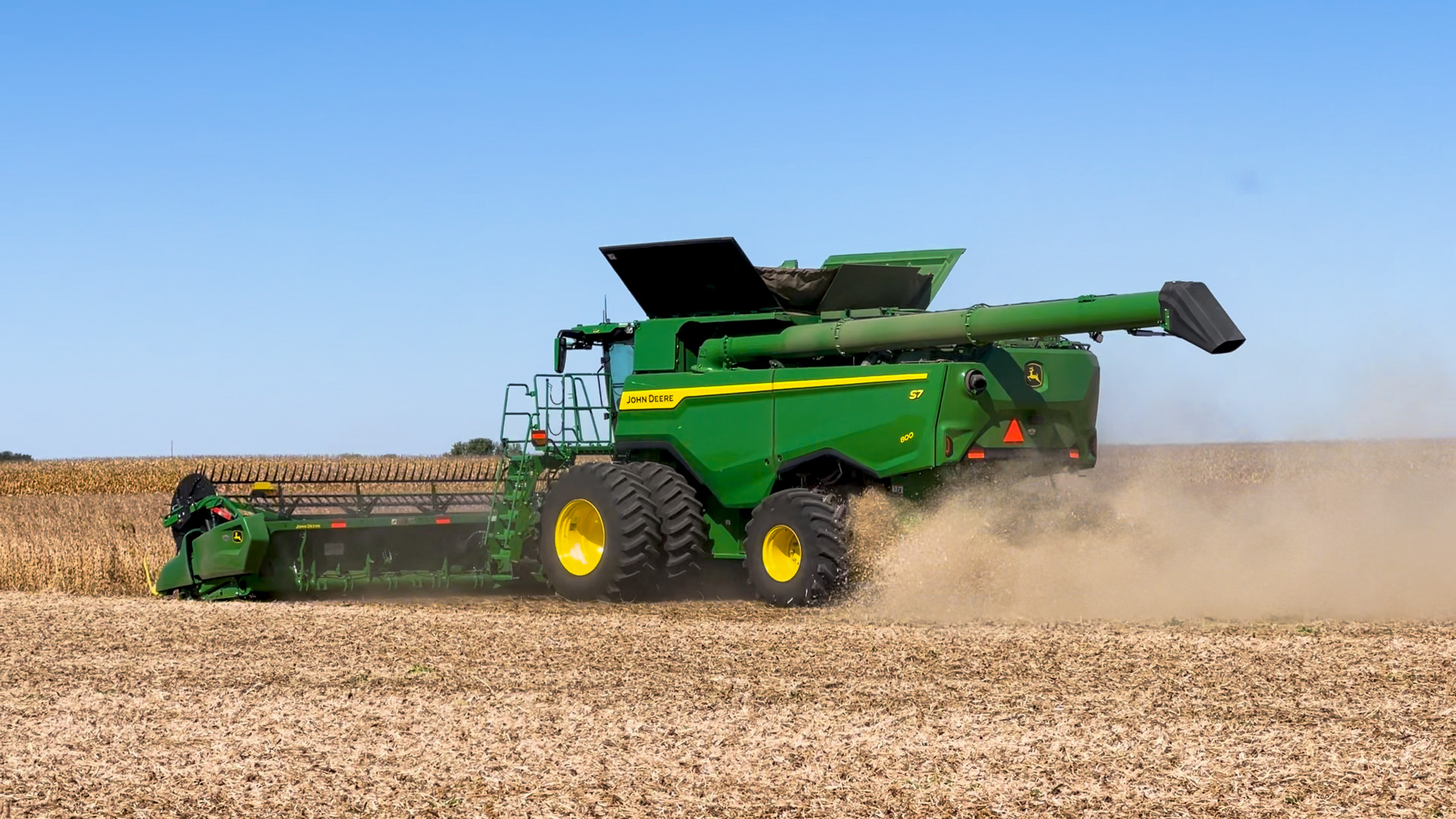
The John Deere S7 Series comes in four models, ranging from the S7 600 with 333 horsepower to the S7 900 with 543 horsepower. This allows you to choose the right combine for your operation size and needs.
- S7 600: 333 hp rated power, 367 hp max
- S7 700: 402 hp rated power, 460 hp max
- S7 800: 473 hp rated power, 540 hp max
- S7 900: 543 hp rated power, 617 hp max
Increased efficiency
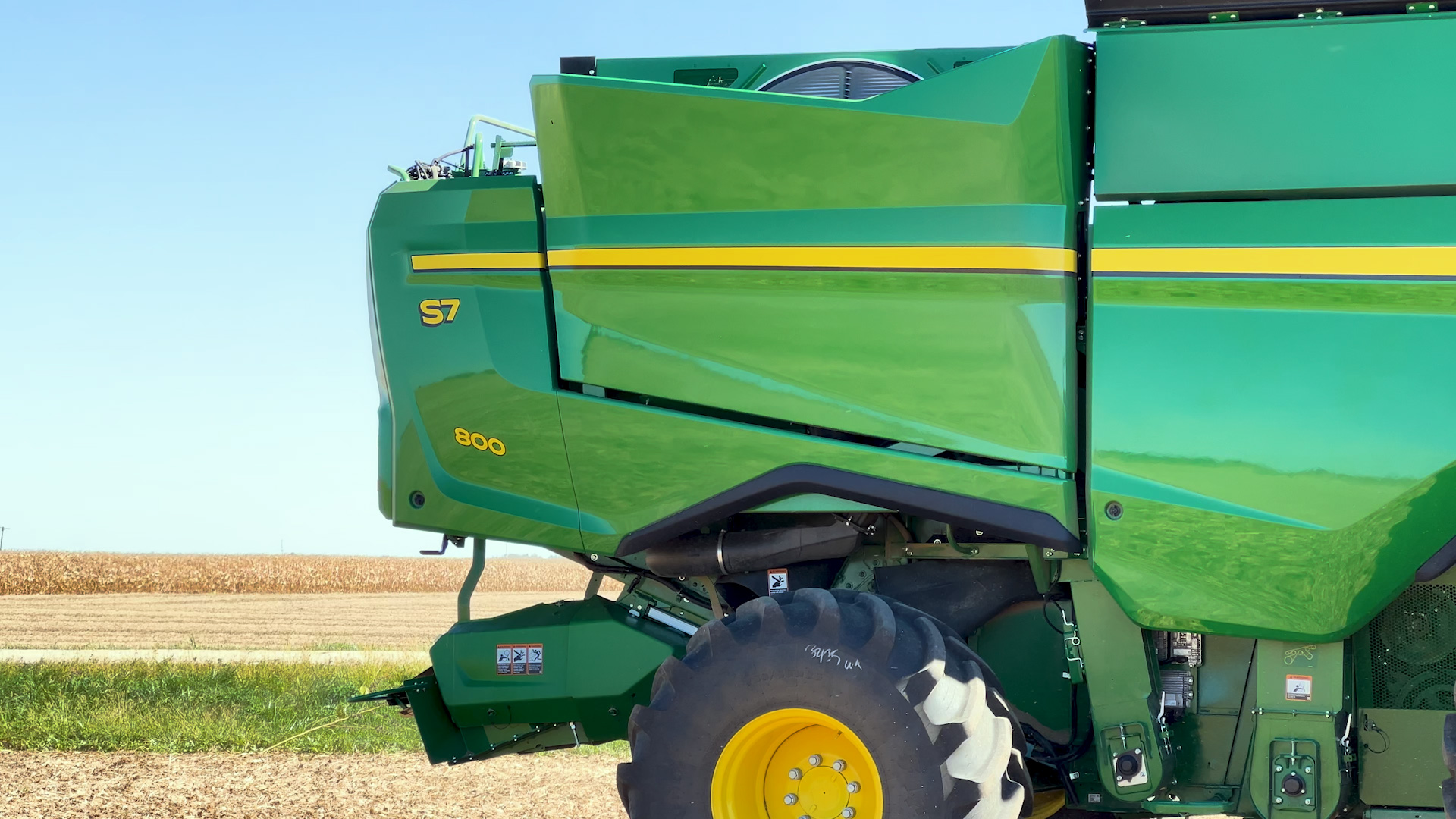
John Deere states that the S7 Series can deliver up to 20% more productivity while using 10% less fuel compared to previous models. This is thanks to new engines, improved residue handling, and grain handling systems.
Improved grain quality
The S7 Series features a new loss-sensing system that is up to three times more accurate than previous systems. This helps you to minimize grain loss and ensure that you are harvesting the highest quality grain possible.
Enhanced cab comfort
John Deere has designed the S7 Series to be one of the most comfortable combines ever produced. The new operator station features more storage space, cupholders, improved heating and cooling, and a more comfortable seat. This will help operators to stay focused and productive throughout long harvest days.
New automation options
The S7 Series is available with three automation packages that can help operators to be more productive, even if they are new to operating a combine.
- Ground Speed Automation is a dynamic ground speed control feature that helps maintain a consistent feed rate by automatically adjusting the combine’s ground speed based on operator inputs and operator-defined limits on variables such as grain loss, engine power, and rotor pressure.
- Harvest Settings Automation helps operators get into the field faster by automatically setting concave clearance, fan speed, rotor speed, sieve clearance, and chaffer clearance, all based on the specific combine model, crop type, and geolocation. Harvest Settings Automation also monitors grain loss and grain quality (foreign material and broken grain) while you harvest and automatically adjusts settings to keep performance under grain loss and grain quality operator-input limits. This feature replaces the existing Combine Advisor Auto Maintain feature and removes the current task for the operator to set the machine to a desired performance level and then set a target.
- Predictive Ground Speed Automation builds on the features of Ground Speed Control, but additionally uses both satellite imagery (collected during the growing season to capture predicted yield) and onboard forward cameras (to sense real-time crop height and biomass) as inputs into Ground Speed Automation for predictive, proactive ground speed control.
Overall, the John Deere S7 Series are a significant upgrade over the S700 . They offer increased efficiency, improved grain quality, operator comfort, and automation options that can help to make your harvest season more productive and profitable.
Ready to make the upgrade? Contact your local Heritage Tractor salesperson for a price quote today.
Explore S7 Series Models
Shop Pre-Owned Combines
Find a Dealership Near You